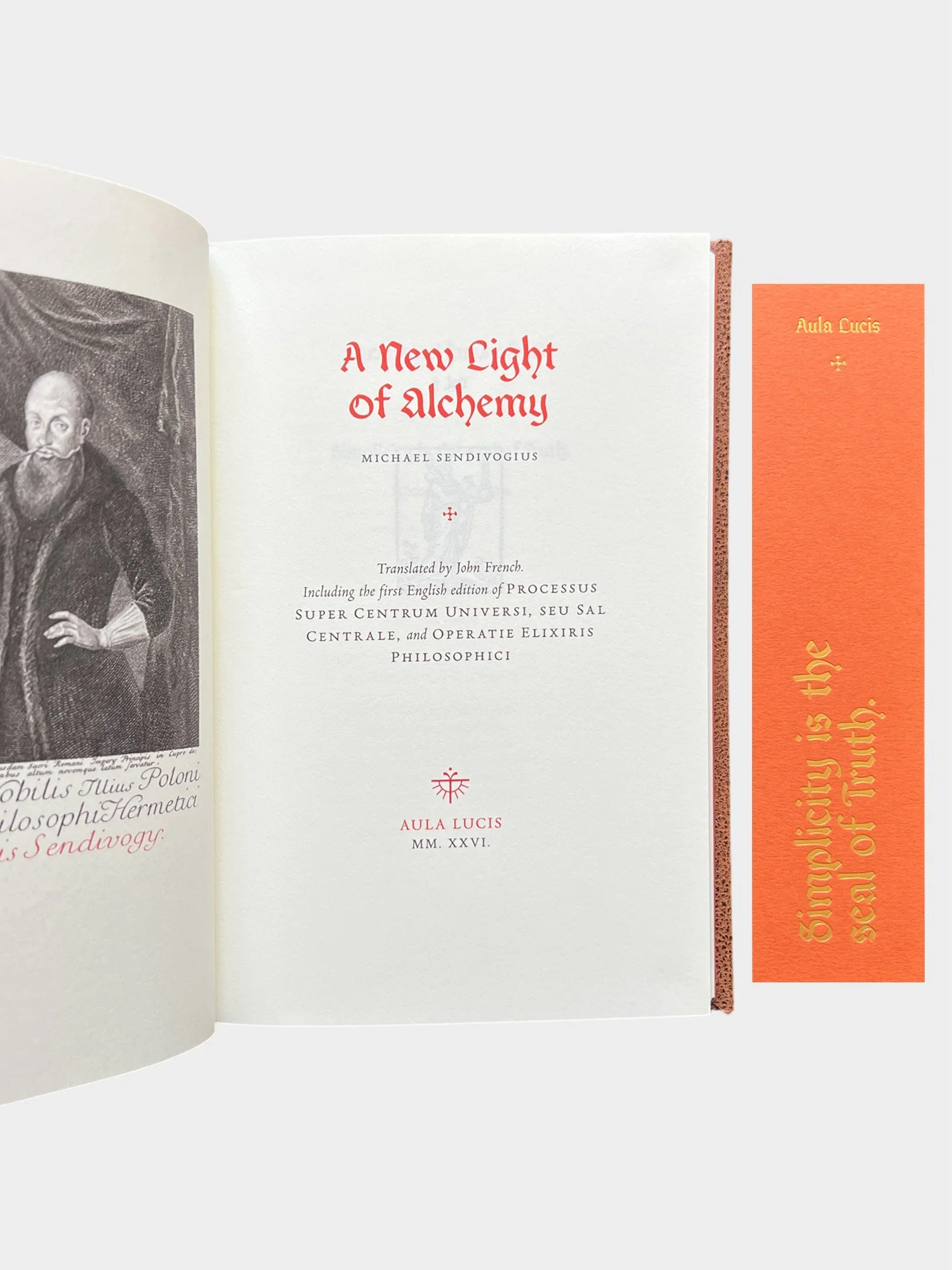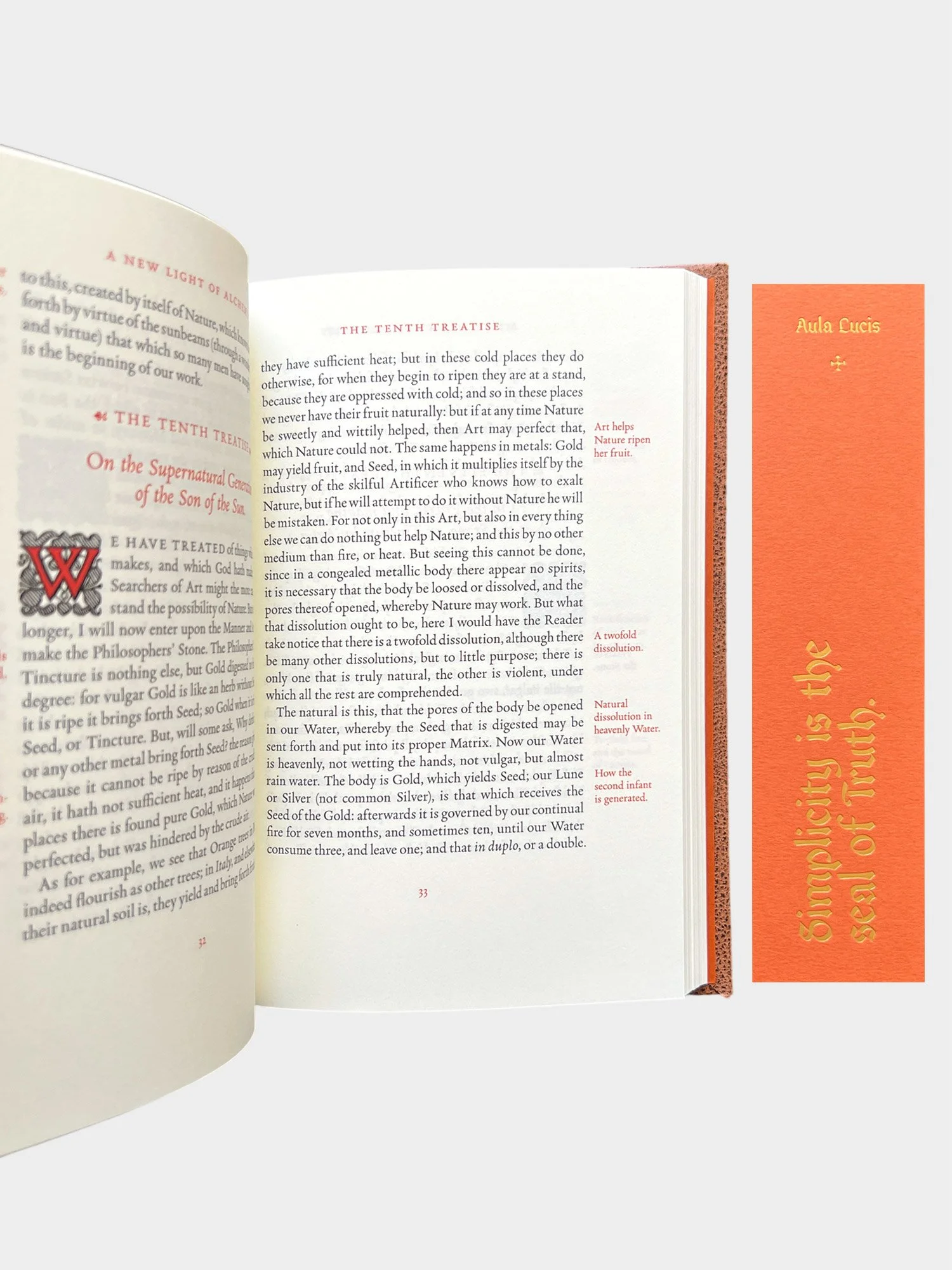
 Image 1 of 3
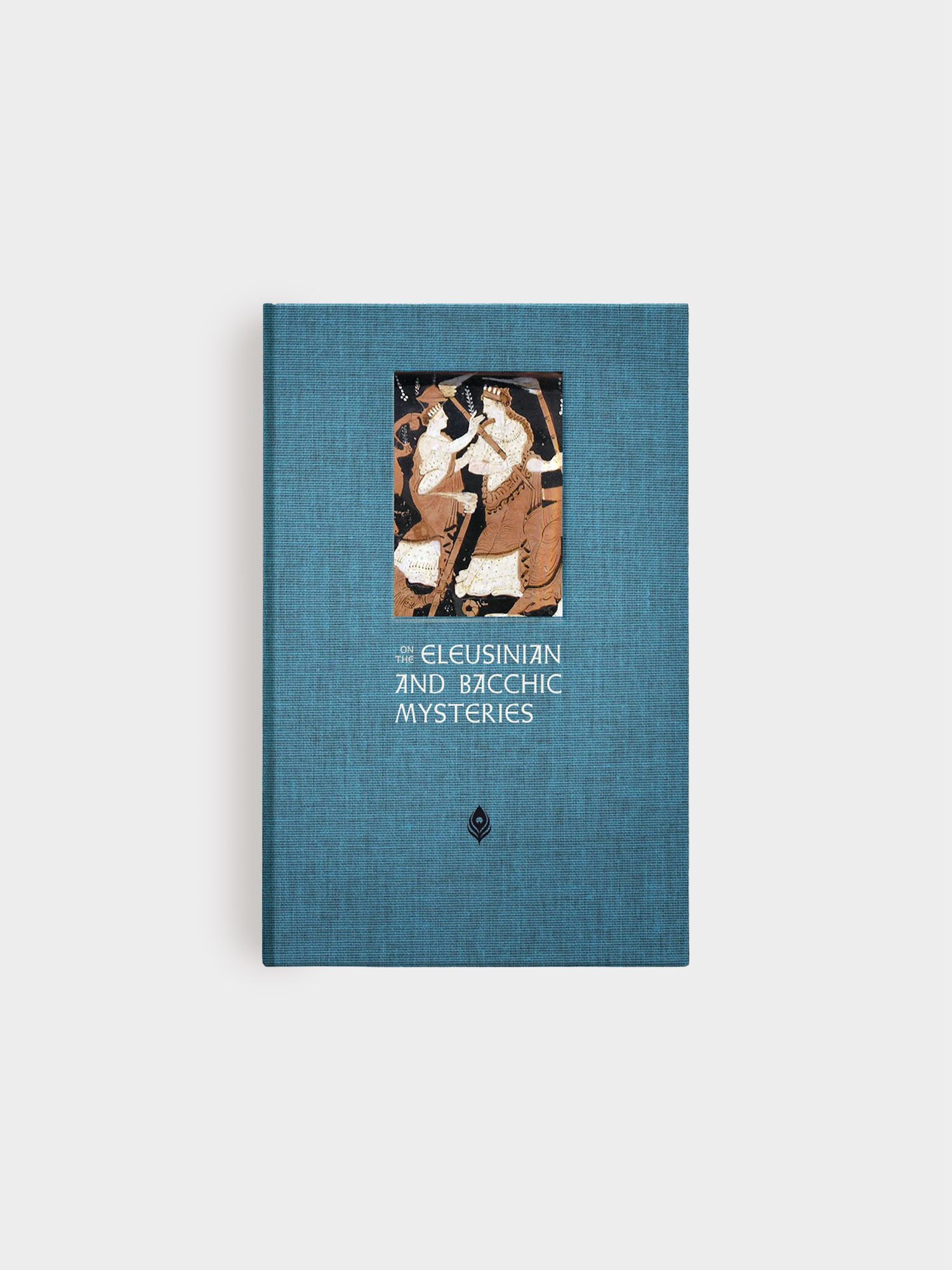
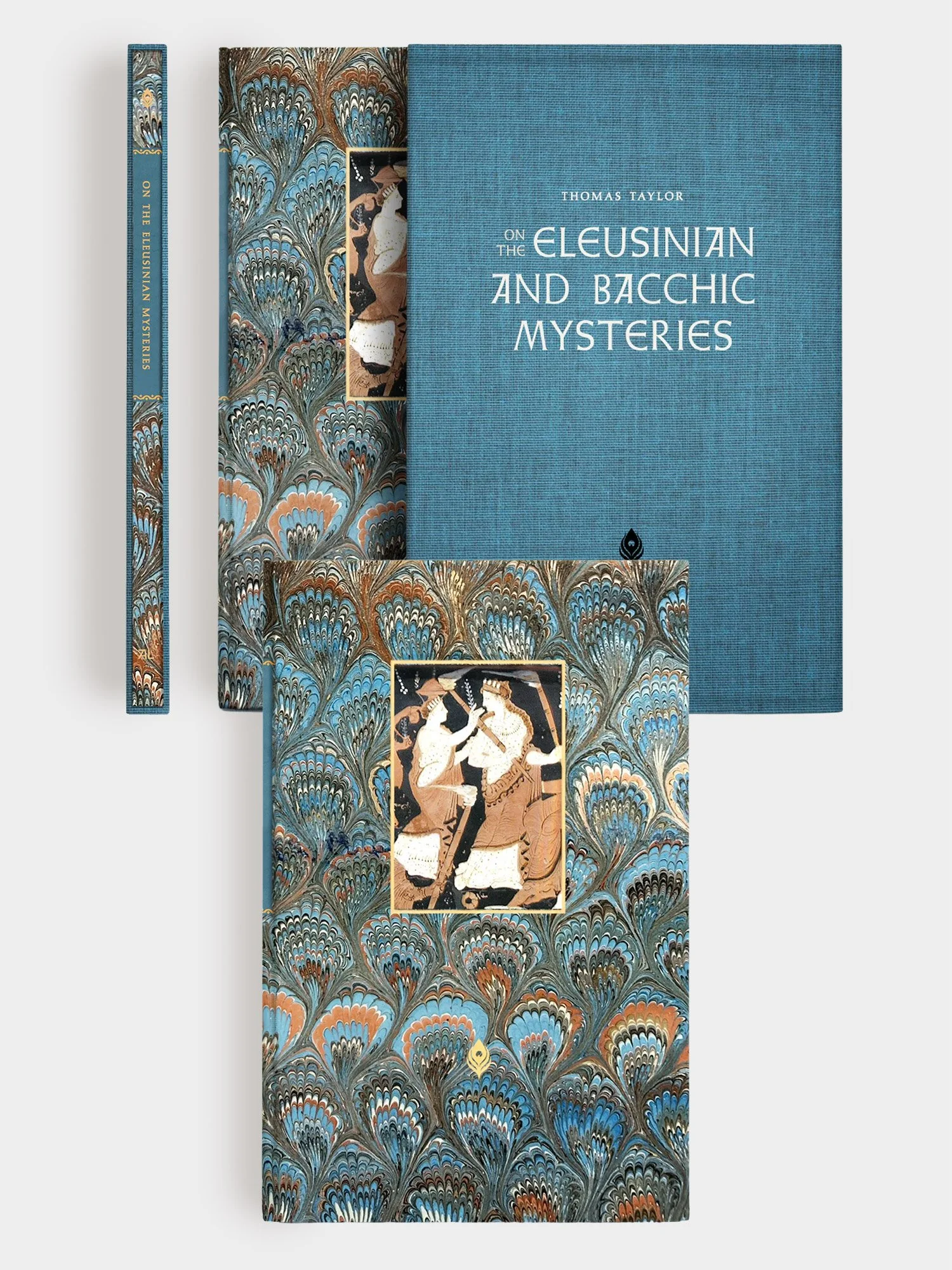 Image 2 of 3
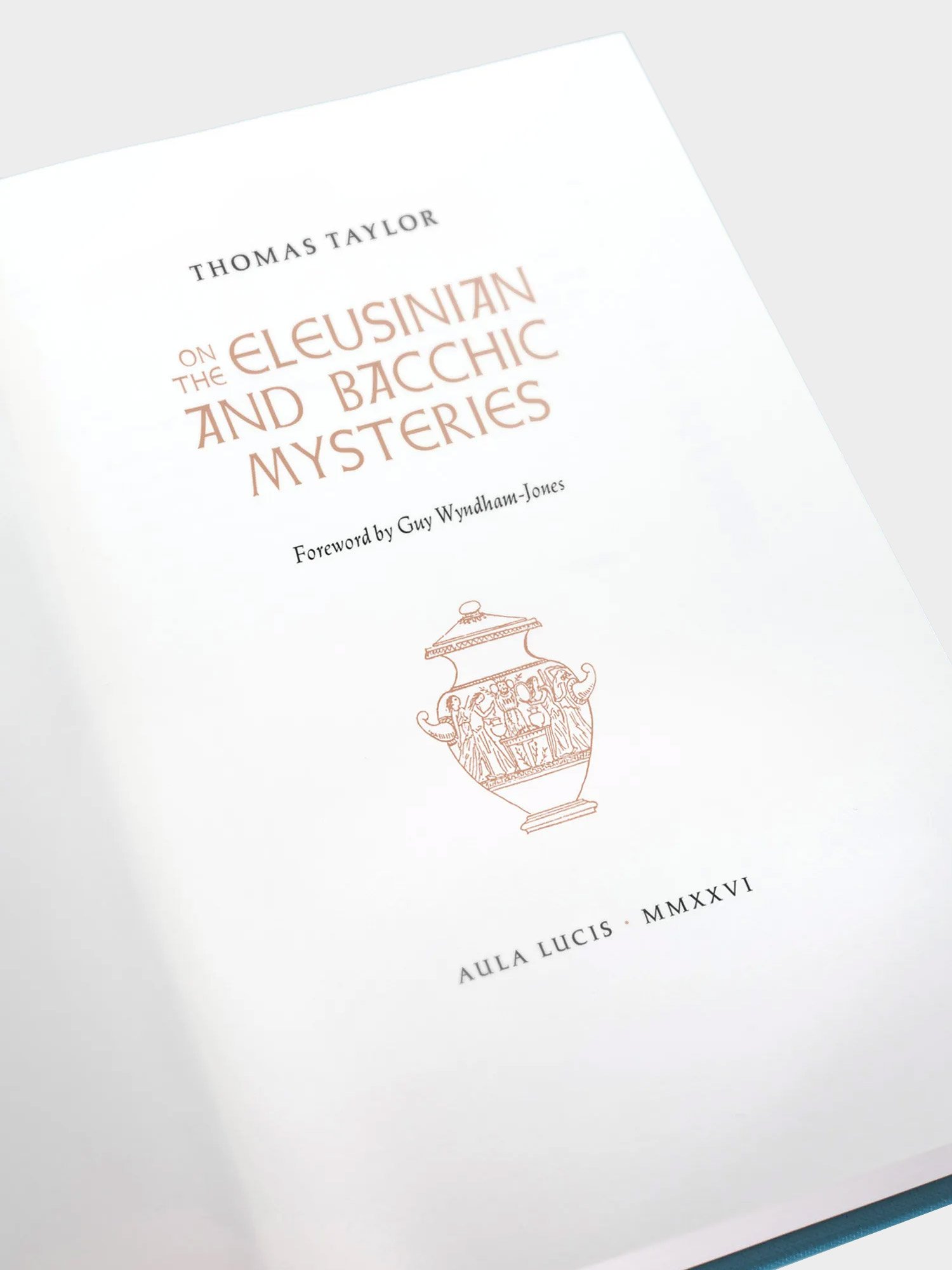 Image 3 of 3
-
Aula Lucis
• Trim size 180 x 120mm.
• 160 pages.
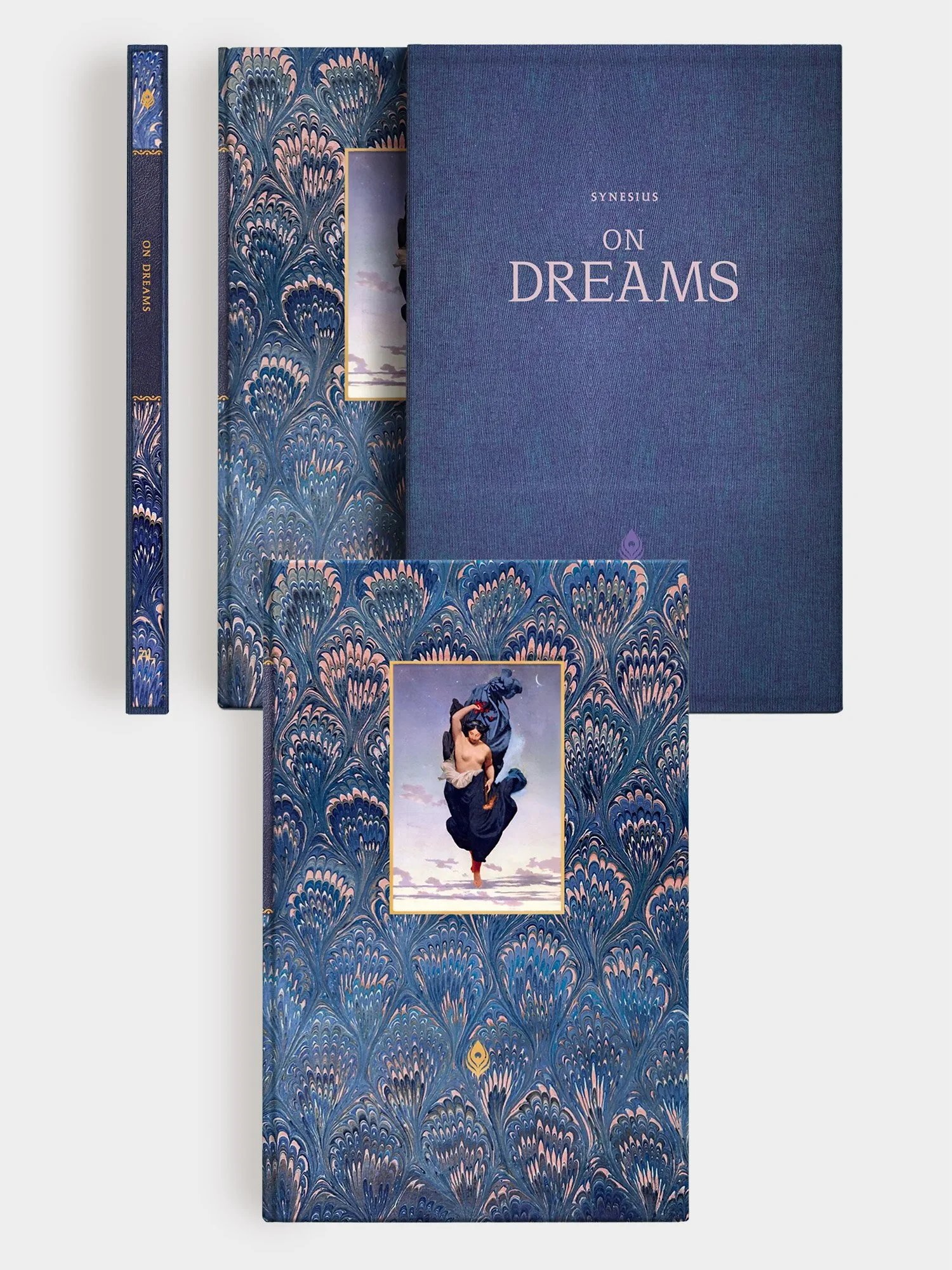
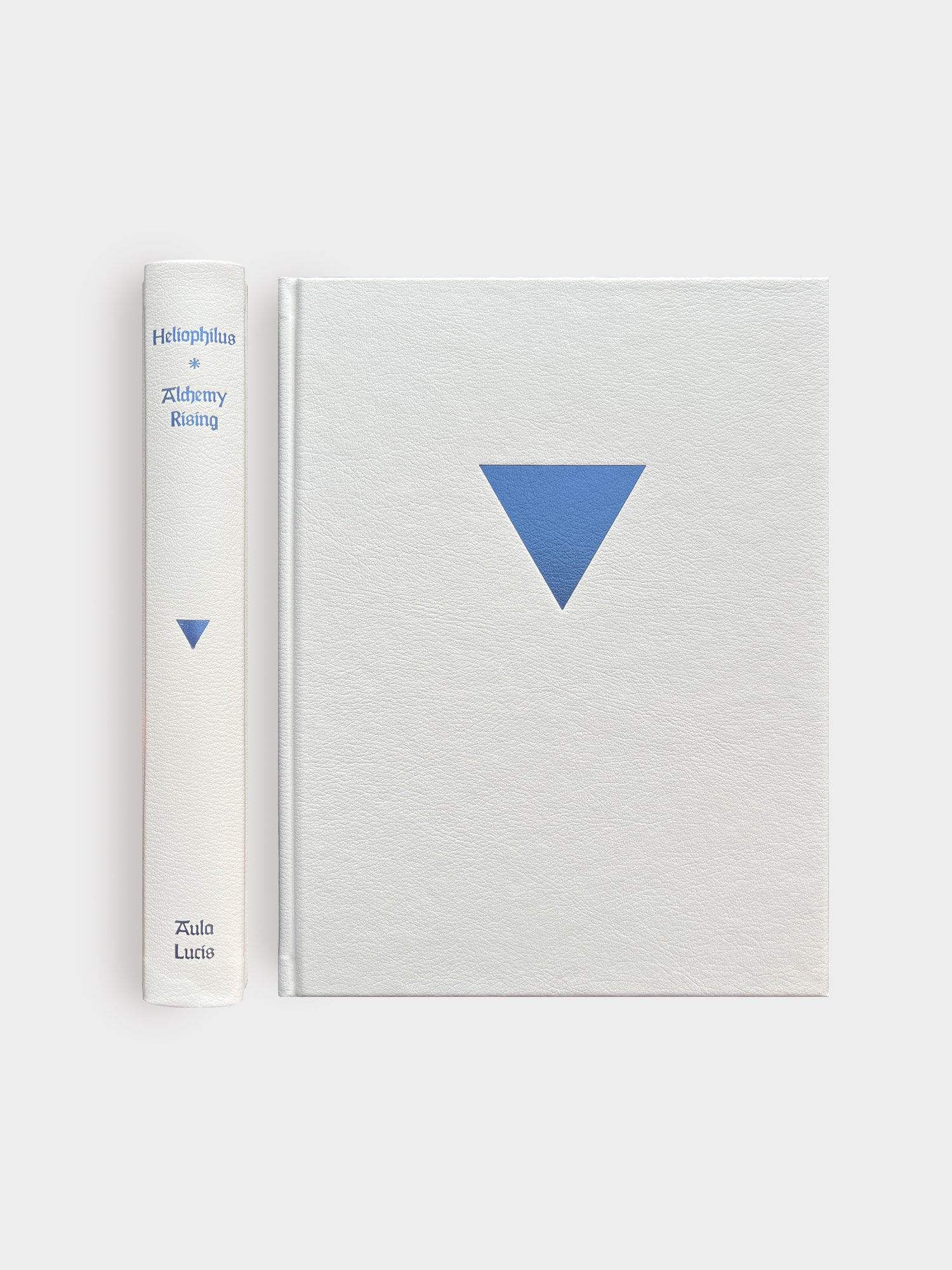
• Bound in blue duotone cloth, stamped in silver and black foils.
• Front cover features coloured inlay with the image of the Eleusinian rites.
• Including over 15 colour illustrations.
• Printed in duotone on premium archival paper.
• Black endpapers, coloured head & tail bands and ribbon.
1st Edition, limited to 1000 copies.
-
Aula Lucis
• Trim size 180 x 120mm.
• 160 pages.
• Bound in peacock-patterned marbled paper, crafted especially for this edition in the colours emblematic of the Eleusinian rites by Il Papiro Firenze of Florence.
• Front cover features coloured inlay with the image of the Eleusinian rites.
• Stamped in gold foil, with hand-cut blue leather title label on the spine.
• All edges coloured black.
• Presented with a slipcase, bound in blue duotone cloth and stamped in silver and black foils.
• Including over 15 colour illustrations.
• Printed in duotone on premium archival paper.
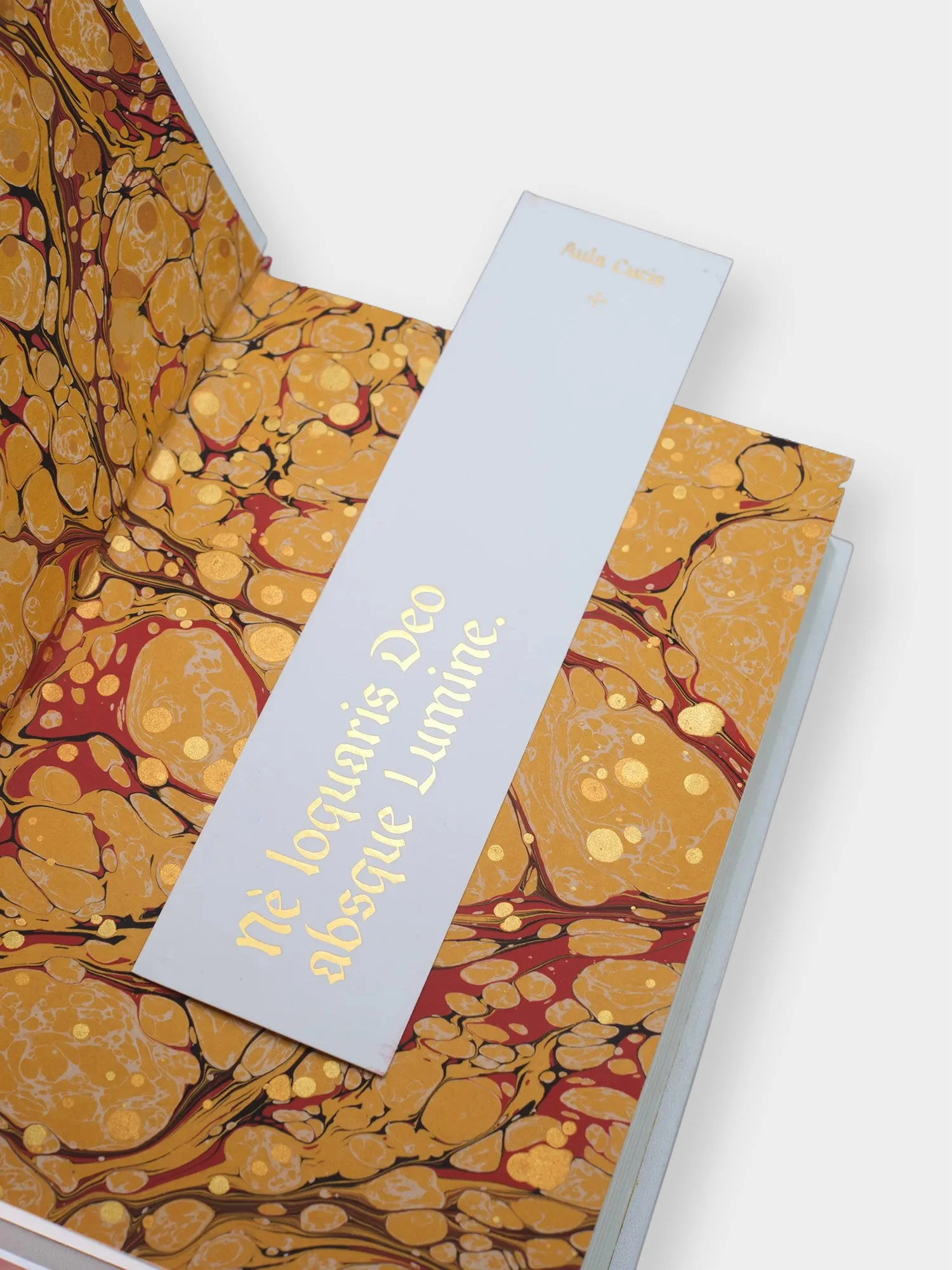
• Black endpapers with peacock-patterned embossing, coloured head & tail bands and ribbon.
• Each volume comes with a standalone colour print featuring a full reproduction of the cover artwork.
Limited to 144 hand-numbered copies.
Description
¶ It is said that the rhapsodic initiations and mystic theology of Orpheus are as old as the mountains from whence he harmonically emerged in a time not recorded by man. Being the immortal son of a Muse and the God of intellectual light and harmony, he was more than a man and less than a God, a towering hero and potent initiator of our kind into the most recondite divine and human realities, in a manner that would inspire, awe, and educate those who came into their far from obvious influence. In his time, and that of those who would legitimately bear the name of Orpheus, his hymns and divinely inspired doctrines flowed as transparent smooth waters, irrigating, purifying, and quickening all who immersed themselves in and experienced them. Thomas Taylor (1758–1835), the self-taught philosopher, mathematician, poet and translator known in his day as “Pagan Taylor,” devoted his life to recovering and expounding the wisdom of the Orphic and Platonic traditions. After publishing in 1787 the first complete English translation of the Orphic Hymns—together with a brilliant Preliminary Dissertation arguing that these sacred songs formed an essential part of the Eleusinian rites—he turned his attention to the mysteries themselves.
¶ Appearing anonymously in 1790 (with a false Amsterdam imprint to evade hostility), A Dissertation on the Eleusinian and Bacchic Mysteries offered a penetrating interpretation at a time when Christian clergy and academic critics attacked ancient theology with what Taylor called “ignorance and malevolence.” His defence of these rites as repositories of venerable truth rather than superstition made him a controversial figure, yet it also established him as the foremost English champion of the ancient wisdom in his generation. The dissertation distinguishes the lesser mysteries, which concern the soul’s union with the present sensible body and its lapse into generation, from the greater mysteries, which disclose the soul’s re-ascent and triumphant return to its celestial home. The Bacchic rites, in turn, echoing the Osirian ceremonies once celebrated in ancient Egypt, veil the distributions of divine and human intellect (nous) into the material Cosmos and their conversion back to their original sources. Throughout, Taylor insists that true penetration of these sacred shows demands not merely intellectual study but the practice of cathartic and theoretic virtues, so that the aspirant may become worthy of the divine realities hymned by Orpheus and celebrated at Eleusis. Eleusinia itself, he reminds us, became the brightest beacon of these mysteries, drawing seekers from across the Greek world to its sacred precincts overlooking the Saronic Gulf, where philosopher-priests transmitted truths that enlightened some and blinded others, as ever they have done.
¶ This new edition returns Taylor’s text to print with all the clarity and philosophical depth it deserves, accompanied by a foreword from Guy Wyndham-Jones that situates the dissertation within Taylor’s larger legacy and the living Platonic tradition. On the Mysteries is an enduring call to the brave and the faithful, reminding us that although the arcane mysteries once instituted by Orpheus remain fully penetrable to but a few, they are of perpetual benefit to all who approach them with the requisite purity and ardour.



![On Dreams [PRE-ORDER]](https://images.squarespace-cdn.com/content/v1/63f0dc03f3010727a440d3a6/247a3ac4-342f-4c01-83d9-4ccb1c5c998d/ON_DREAMS_01.jpg)