 Image 1 of 1
-
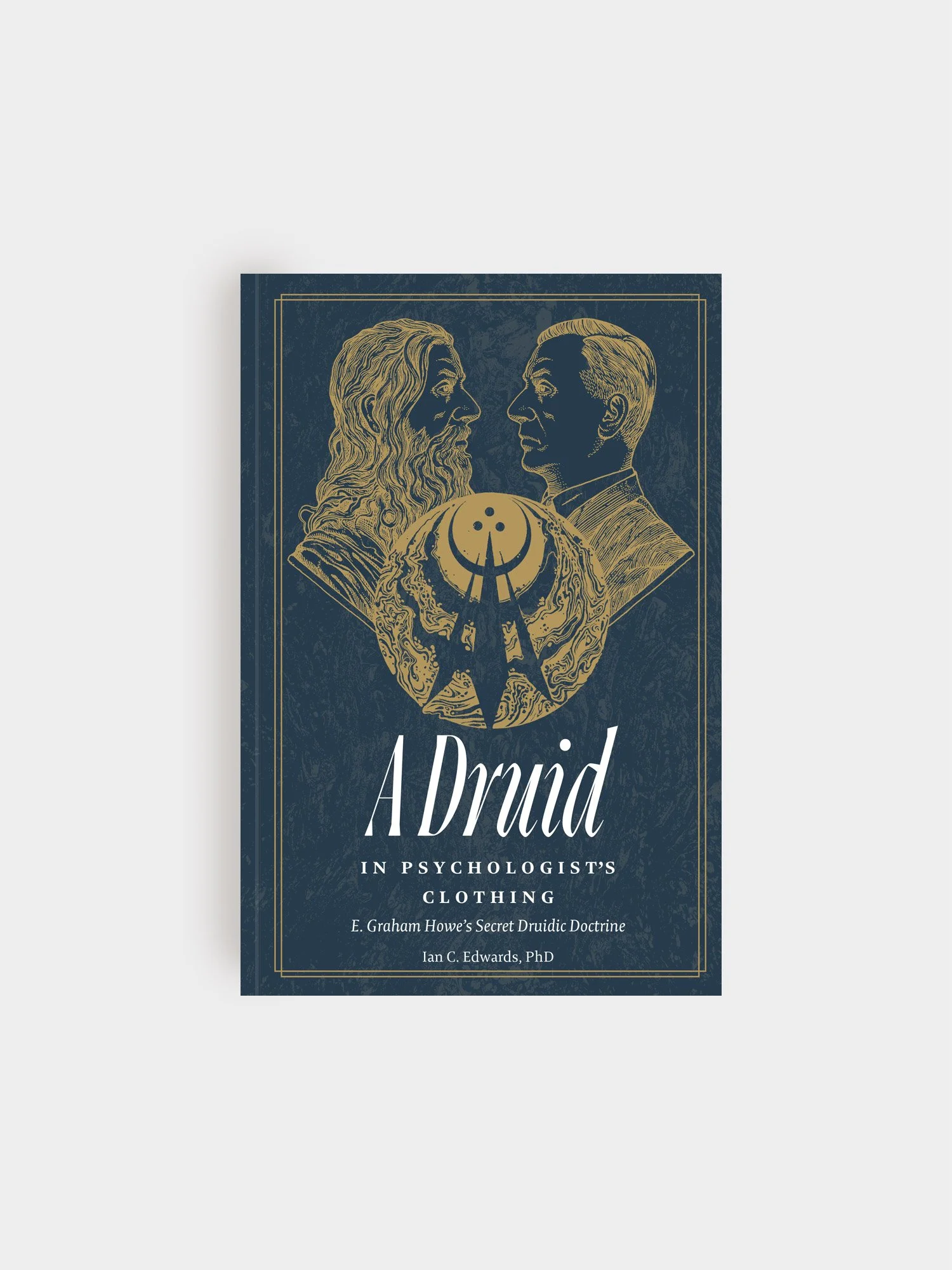
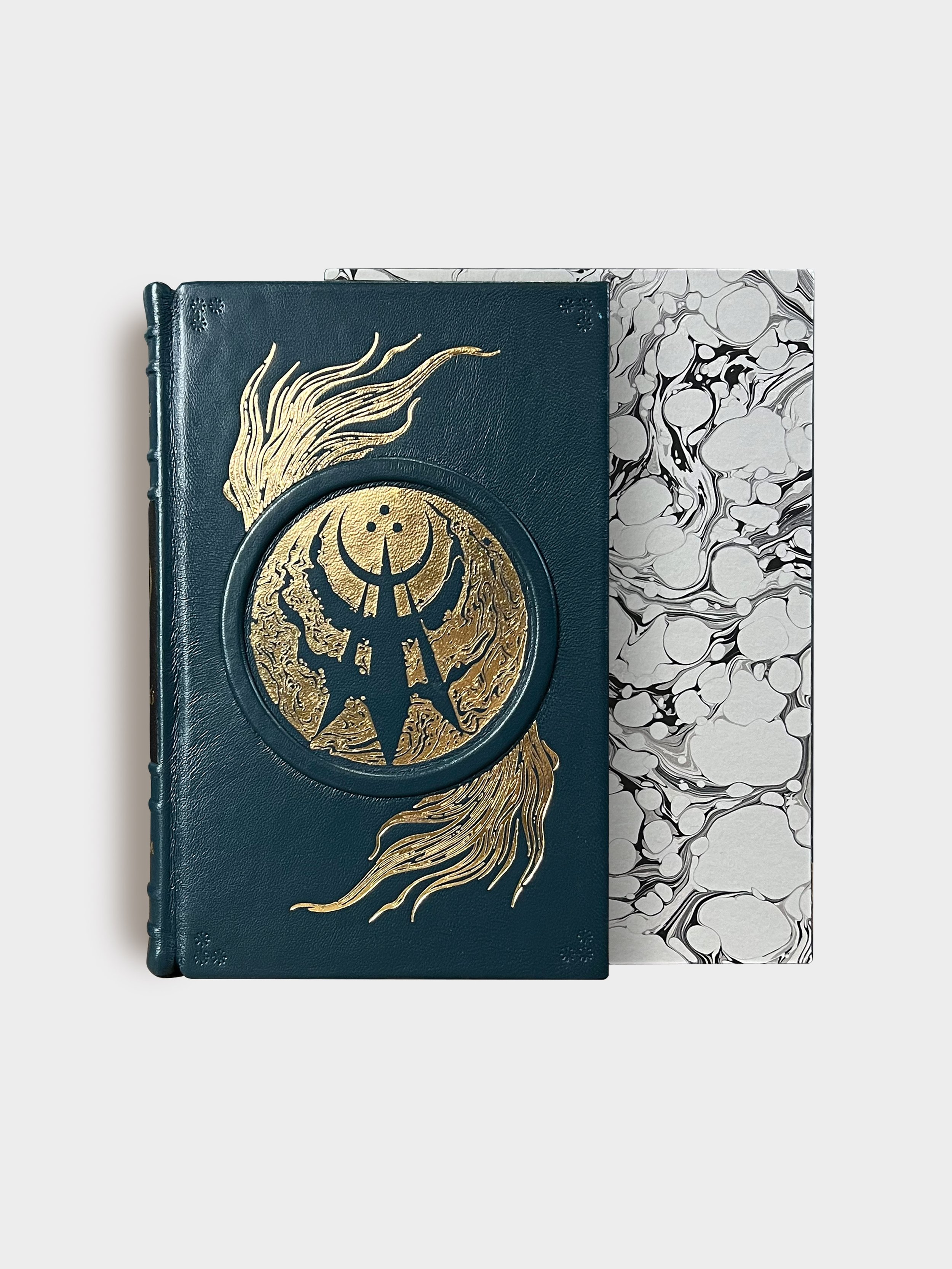
Printed full colour cover. Head and Tail Bands.
Limited to 333 copies
Contents
[To Come.]
Description
The essence of the book involves a careful reading of Khiazmos that integrates fundamental aspects of deconstruction and Acéphalic mysticism. Edwards titled this chapter, “Introduction to the Without Life,” a sort of a play on St. Francis de Sales, Introduction to the Devout Life. The sections in this chapter adhere closely to Chumbley’s own style. Edwards didn’t simply write about Khiazmos but ventured to write from the place that Khiazmos was written, as a “transmission through the Oracle of Silence.” The sections in the chapter explore the intersection between what Edwards calls “aporiosis,” kenosis, and apotheosis, Chumbley’s Al Q’Mu as a Cypher for the Nameless, “Silence Knowing Itself,” Chumbley’s “My Body” as Transition, The Path of the Sanctified Devil, and “The Other: From the Symbolic to the Real”. In his “Introduction to the Without Life,” Edwards highlights the importance of what he believes to be the central notions in Khiazmos – the importance Chumbley places on “Becoming Magic,” his “Godless Apotheosis,” the Geminus – Absence-in-Presence/Presence-in-Absence, and the New Flesh.
At the back of the book, there is a special Appendix section. In this section, divided into four Appendices, Edwards introduces 1) Four Acephalic Meditations that he created, using Chumbley’s “Four Excellences” as a foundation; 2) his “Thirty-One Parapraxes of the Sacred”; 3) “Schizes and Flows,” which is a brief meditation on the work of Antonin Artaud, concluding with the development of what Edwards calls his “Magic Theatre,” patterned after Hermann Hesse’s Steppenwolf, consisting of five “Collective Monologues” between Chumbley as “Alogos,” Artaud as “Artaud the Momo,” and Edwards as “(Q)ayin-Mu”, an inverted “trinity” representing the Sanctified Devil; and 4) “Vocatus atque non vocatus Deus absentia”, as what Edwards calls an “Adversarial Mantra” that the reader is invited to pray using special instructions. (This is an inversion of Jung’s famous, Vocatus atque non vocatus Deus aderit, which Edwards views as a “Geminus,” using Chumbley’s term).
Tarrying with the Impossible evocatively concludes with what Edwards calls a “Concluding Incomprehensible Postscript,” which is a play on Soren Kierkegaard’s “Concluding Unscientific Postscript.” The Postscript is more than just a conclusion to Volume IV but serves as a conclusion to Being and Non-Being in Occult Experience as a whole. In this section, Edwards explores his own “becoming magick,” and dare he say, “Apotheosis.” He notes that his realization, the “telos that guided his vision” in Being and Non-Being in Occult Experience was to heal himself from, to quote Jung from The Red Book, “the God (who) appears as our sickness…since he is our heaviest wound” and to articulate that “the practice of magic consists in making what is not understood understandable in an incomprehensible manner.” Edwards writes,
“With my scythe, letters of otherness were torn into the page, lacerating each word with the Impossible. I wounded the word to reclaim magick from the shadow of the comprehensible, returning it to the Oracle of Silence who spoke the Inceptual Wordless Word.”